
Haus der Geschichte
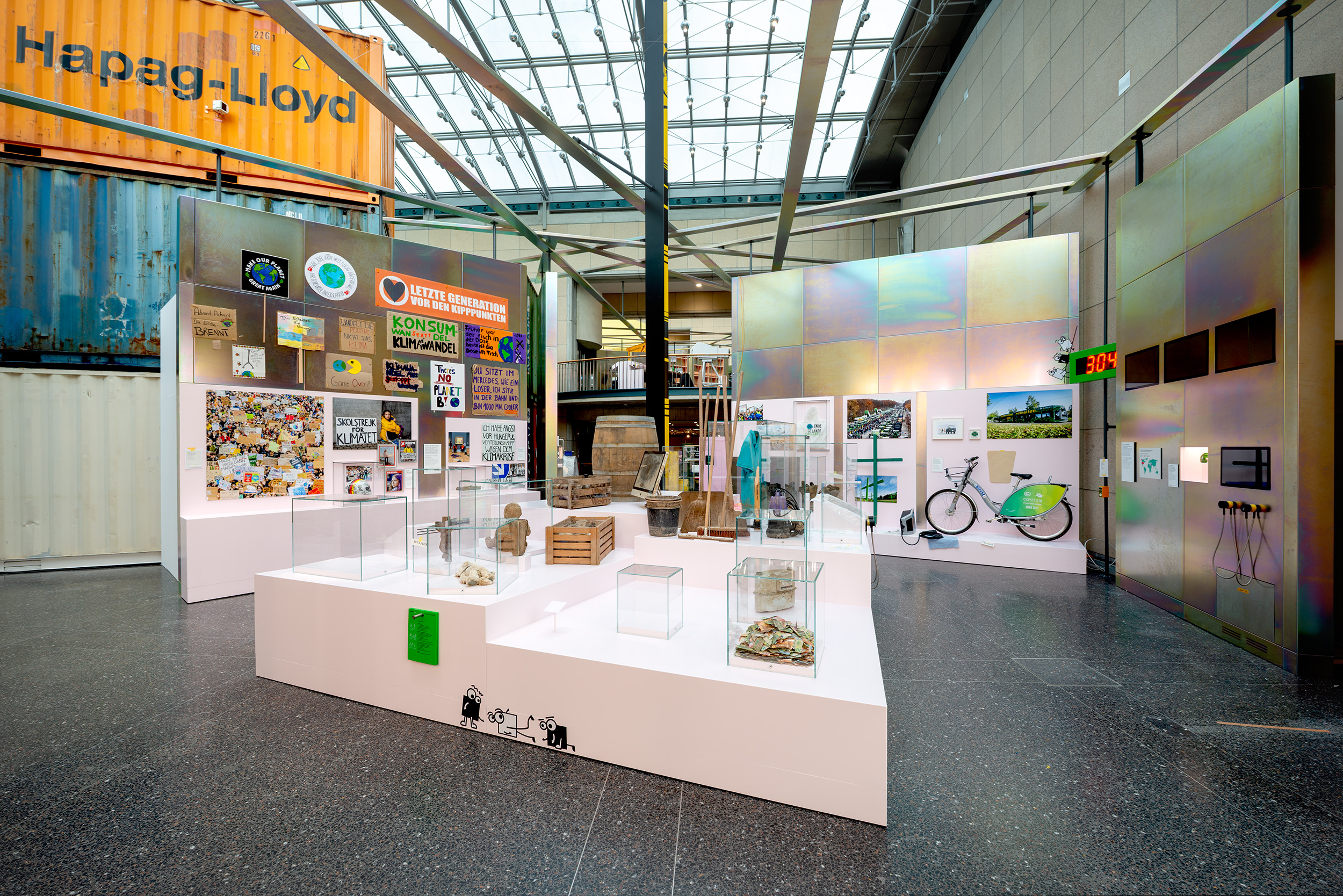
What significance does German history have for our lives today? How do historical events influence our everyday lives and our understanding of democracy? With the new permanent exhibition “You Are Part of History. Germany Since 1945,” which opened on December 9, 2025, the Haus der Geschichte in Bonn is setting new standards in the communication of contemporary German history.
After more than 30 years, the permanent exhibition has been completely redesigned. At its heart is a contemporary exhibition concept that connects historical events with personal experiences. Digital applications, interactive features, and participatory formats allow visitors to adopt different perspectives on history and contribute their own experiences. The exhibition understands history not as a closed process, but as something that continues to have an impact on the present and is shaped by every individual.
GROTE GmbH, in cooperation with the Amsterdam-based design studio Kossmanndejong, is responsible for consulting in service phases 1–3, the preparation of the specifications, participation in the tendering process, and artistic direction until the handover of the new permanent exhibition.
Szenografie
The exhibition divides German history since 1945 into five periods, ranging from the post-war era through German division and reunification to the present day. It concludes with the history workshop “Today,” which addresses current social issues.
The spatial design translates the historical developments into diverse scenographic worlds. Each exhibition area has its own distinct design identity, making the respective period atmospherically tangible. While the post-war period is conveyed through a spatial design characterized by uncertainty, the interconnected structure of the present day represents an increasingly globalized society.
Approximately 3,800 exhibits illustrate Germany’s political, social, and cultural transformations. In addition to historical documents and objects, personal items tell stories of individual lives and experiences. These include, among other things, a self-constructed escape plane, a Ford Transit van from the story of an immigrant family, and a treehouse from the environmental movement.
The exhibition connects major historical developments with individual biographies. Personal recollections and eyewitness accounts offer diverse perspectives on life in Germany since 1945. This creates a multifaceted narrative that not only conveys history but also encourages reflection and active engagement.

Grafik
Clear and concise infographics convey complex historical, social, sociological, and political developments in an easily understandable way. In addition, a tour designed specifically for children leads through the exhibition; it is marked by green panels featuring tasks, along with corresponding interactive exhibits for them to try out.
Medien
In addition to various media stations, the Berlin-based agency Schnelle Bunte Bilder developed six interconnected, participatory media installations – from the prologue and four interactive stations to the epilogue.
A continuous media narrative emerges, placing visitors at the center. History is not merely observed, but linked to and reflected upon in relation to one’s own biography. Personal decisions, memories, and attitudes reveal one’s own role in historical processes.